
Ultimate Guide: Why Choose Stunning Exterior Steel Doors with Glass in USA
When selecting an entry door for your home in the United States, the decision often comes down to balancing security, aesthetic appeal, and energy efficiency. Among the many materials available—wood, fiberglass, and steel—the exterior steel doors with glass in USA stand out as a premier choice that elegantly bridges the gap between robust protection and abundant natural light. These doors have become increasingly popular for modern and transitional American architecture due to their unmatched durability and sleek, customizable design. This comprehensive guide will explore the practicalities, technical specifications, and stylistic considerations you need to make an informed decision for your home improvement project.
From my experience in the fenestration industry, homeowners who initially prioritize a beautiful, light-filled entry often overlook the importance of the door’s structural integrity and thermal performance. Steel doors address this concern head-on. The advancements in manufacturing have allowed for thermally broken frames and highly efficient glass packages, ensuring your stylish entryway doesn’t become an energy liability. Consequently, a steel door with glass offers a high-value return on investment, blending the highest security rating with a striking, inviting entrance.
What is an Exterior Steel Door with Glass?
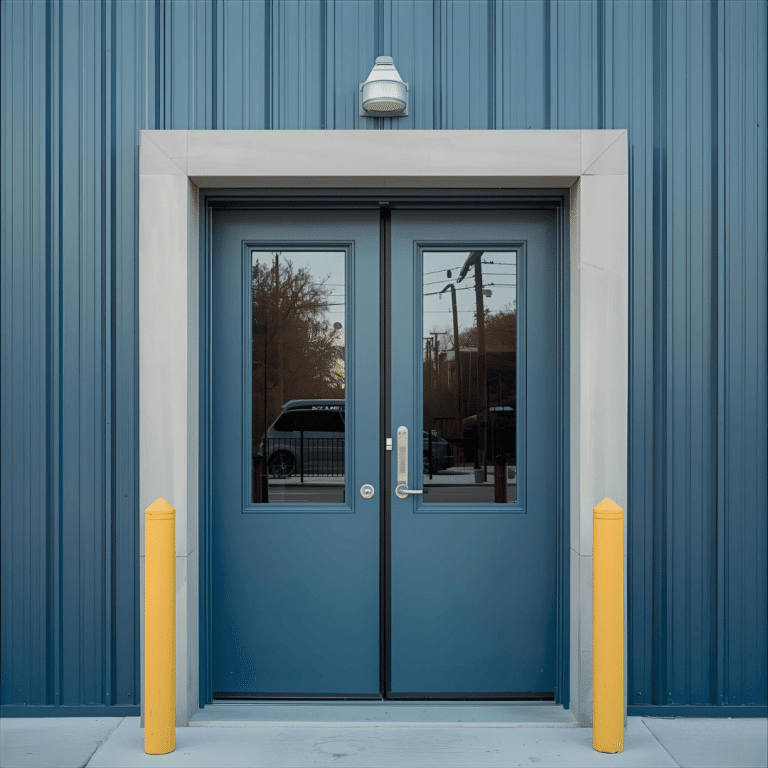
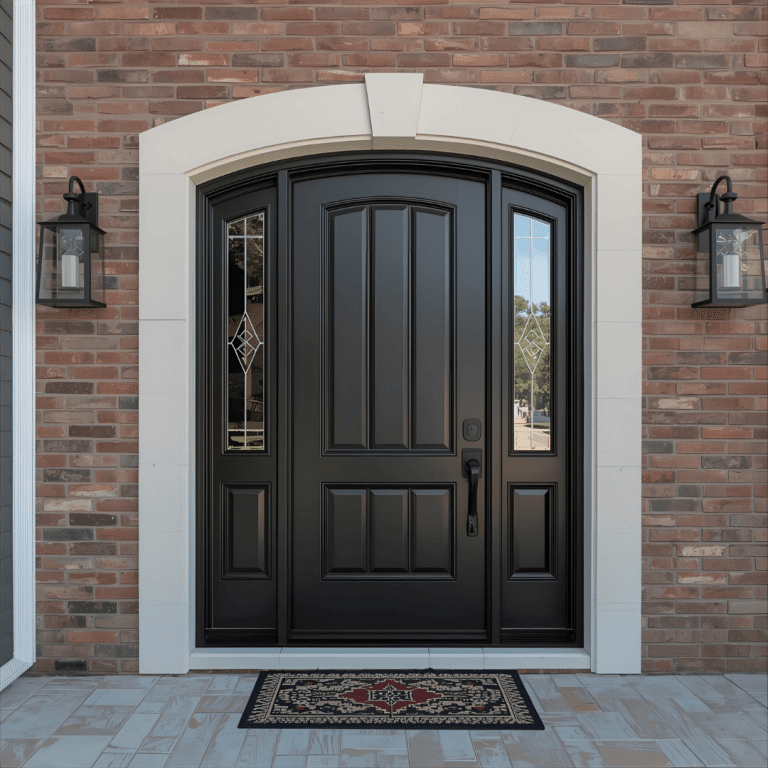
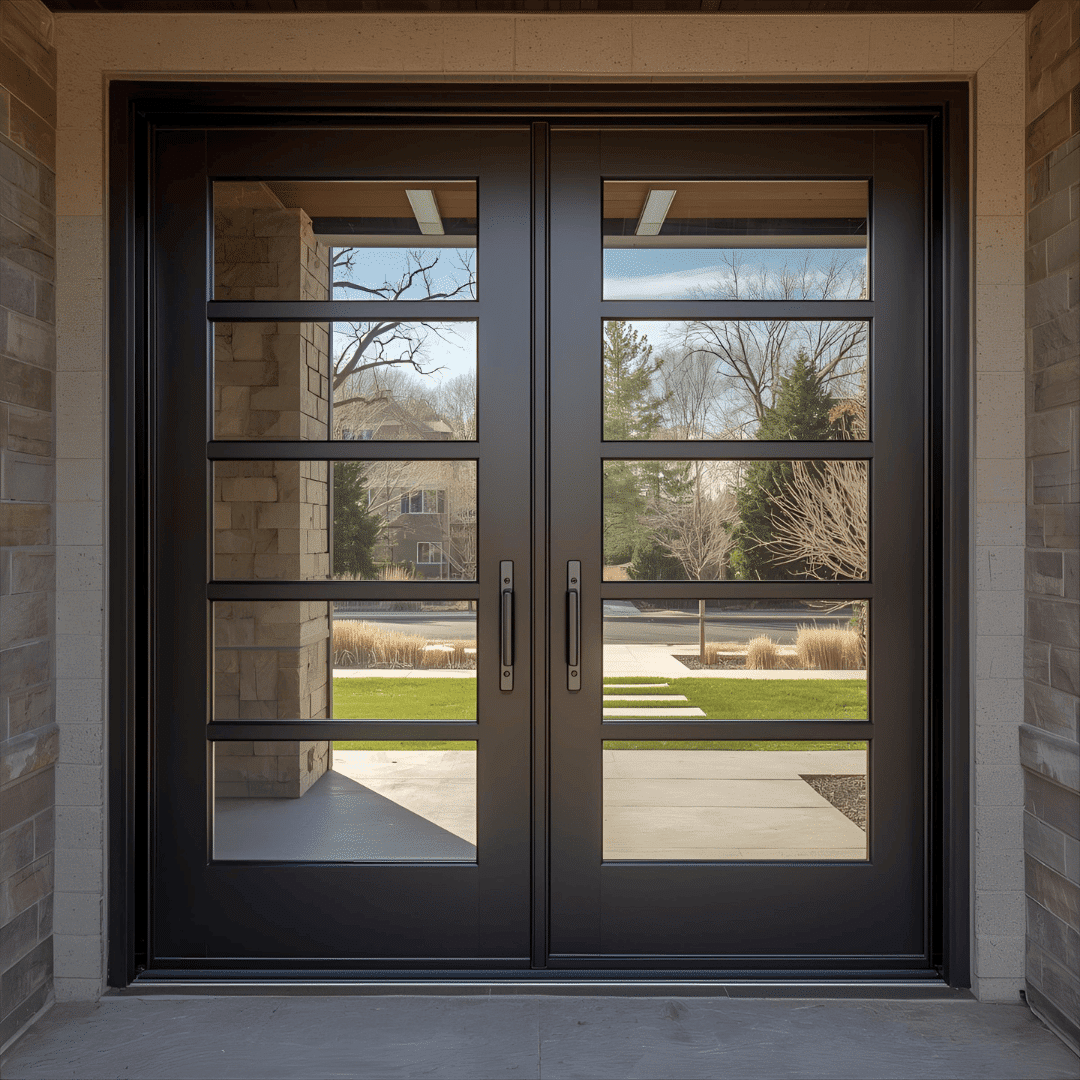
An exterior steel door with glass in USA is an entry system featuring a steel slab, typically constructed from 20- to 24-gauge steel, filled with an insulating core (like polyurethane foam), and integrated with one or more glass inserts, known as lites or glazings. The term “exterior steel doors with glass in USA” broadly covers everything from a door with a small, decorative lite near the top to a modern full-view door with a large glass panel. These doors are highly valued in the United States housing market for providing superior security, durability, and better insulation than many traditional wood doors.
❓ People Also Ask (PAA) Section
Homeowners in the United States often have specific questions about combining the strength of steel with the vulnerability of glass in an exterior application. Here are expert answers to the most common queries:
1. Are steel doors with glass considered secure against forced entry?
Absolutely. The steel slab and frame are inherently strong, and the integrated glass panels are almost always tempered or laminated glass, designed to resist impact. While the presence of glass creates a potential vulnerability, high-quality doors feature robust glazing systems and secure mounting frames that meet or exceed United States residential security standards, making them a very secure choice.
2. Do steel doors with glass meet modern energy efficiency standards?
Yes, they do, provided they are correctly specified. Modern steel doors utilize thermal breaks in the frame and are fitted with Insulated Glass Units (IGUs), typically double or triple-pane with Low-E coatings and argon gas fill. These features ensure the door meets or surpasses the strict ENERGY STAR v7.0 criteria required for many US climate zones, significantly reducing thermal transfer.
3. Will the glass panel in my steel door be susceptible to condensation?
Condensation forms when warm, moist interior air meets a cold surface. In a high-quality steel door, the use of Insulated Glass Units (IGUs) with warm-edge spacers helps to maintain the interior pane temperature closer to the room’s temperature, minimizing condensation. For particularly humid areas or cold climates, opting for triple-pane glass or a door with a very low U-Factor is the best defense against condensation.
4. How do I maintain the finish on a steel door with glass to prevent rust in the USA’s varying climates?
Modern steel doors are typically made from galvanized steel treated with an anti-corrosion primer and a baked-on, durable topcoat, which provides excellent resistance to rust. For homeowners, maintenance involves routine cleaning with mild soap and water, immediately touching up any scratches that expose bare metal, and periodically checking the weatherstripping around the frame and glass for any signs of wear.
🛠️ The Core Benefits of Exterior Steel Doors with Glass
The growing preference for steel doors with glass across the United States is not merely a trend; it is driven by measurable, practical benefits in security, durability, and long-term value.
1. Unmatched Security and Durability
Steel is fundamentally the strongest material for residential entry doors, offering superior resistance to kick-ins and forced entry compared to wood or fiberglass. This is a critical factor for American homeowners prioritizing peace of mind.
- Forced Entry Resistance: The steel skin provides a rigid barrier that is extremely difficult to breach. High-quality models are typically 20-gauge or 22-gauge steel, thicker and stronger than the 24-gauge used in budget options.
- Tamper-Proof Glazing: The glass in a modern steel door is not simply glued in. It is secured within a high-strength frame and often uses tempered glass (shatters into safe, blunt pieces) or laminated glass (holds together even when broken) for enhanced security and compliance with US safety glazing standards.
- Structural Integrity: Unlike wood, steel will not warp, rot, or crack under extreme weather conditions, ensuring that the door maintains a tight, secure fit within its frame for decades.
2. Superior Energy Efficiency and Thermal Performance
A common misconception is that adding glass compromises a steel door’s energy performance. This is no longer true, thanks to modern fenestration technology. In fact, many steel doors with highly efficient glass packages outperform solid wood doors.
Understanding Key Energy Terms
The National Fenestration Rating Council (NFRC) provides the standardized ratings used across the United States to measure a door’s performance. When shopping for an energy-efficient door, you must understand these three terms:
| NFRC Rating Term | What it Measures | Target Value (for Efficiency) | US Climate Relevance |
| U-Factor | Rate of heat loss/transfer (insulation ability). | Low (e.g., $\le 0.28$) | Crucial for all US climates, especially Northern zones to retain heat. |
| Solar Heat Gain Coefficient (SHGC) | Amount of solar radiation admitted (solar heat gain). | Low (e.g., $\le 0.23$) | Crucial for Southern, cooling-dominated climates to block heat. |
| Visible Transmittance (VT) | Amount of visible light transmitted. | High (e.g., $\ge 0.50$) | Affects daylighting and can be balanced with SHGC for comfort. |
According to the U.S. Department of Energy (DOE), a low U-Factor is critical for all climates, while the ideal SHGC depends heavily on whether you live in a heating-dominated (Northern) or cooling-dominated (Southern) climate zone [Source: Doors | Department of Energy]. Always look for the ENERGY STAR label, which signifies the product meets the latest performance criteria for your specific US climate zone.
3. Customizable Aesthetics: From Modern to Traditional
The inclusion of glass allows a steel door to move beyond its utilitarian reputation and become a focal point of a home’s curb appeal.
- Diverse Glass Options: You can choose clear glass for maximum light, or opt for frosted, rain, reeded, or decorative patterned glass to achieve an ideal balance of daylighting and privacy.
- Lite Configurations: The amount of glass (glazing level) is highly customizable, ranging from a full-lite (mostly glass) for a modern, bright entryway, to a half-lite or three-quarter-lite for a more traditional look with increased privacy.
- Finishing Versatility: While often purchased pre-finished, the smooth surface of a steel door is an excellent canvas for painting. High-quality steel can be finished to mimic the appearance of wood grain, offering the aesthetic appeal of a wood door with the durability of steel.
4. Low Maintenance and Long-Term Value
Steel doors are famously low-maintenance, requiring only periodic cleaning. They do not demand the seasonal painting or staining that wood doors require, and they are less susceptible to cracking or denting than fiberglass. This low-cost, minimal-effort upkeep saves American homeowners time and money over the door’s long lifespan. Furthermore, a new steel door consistently offers one of the highest returns on investment (ROI) of any home improvement project, often recouping 75% or more of its cost at resale [Source: Energy Efficient Home Improvement Credit | Internal Revenue Service].
🔬 Technical Deep Dive: Glass Options and Insulation Technology
Choosing the right type of glass is perhaps the most important technical decision when purchasing an exterior steel door. It directly impacts your home’s security, privacy, and energy bill.
Selecting the Right Glazing (Glass)
The glass in your steel door will be part of an Insulated Glass Unit (IGU), which is essential for thermal performance.
Insulated Glass Unit (IGU) Construction Checklist
- Double or Triple Pane: Two panes of glass are standard; three panes are superior for extremely cold Northern climates in the US, providing significantly lower U-Factors.
- Low-Emissivity (Low-E) Coating: This invisible metallic layer reflects heat back to its source. Soft-coat Low-E is ideal for hot Southern climates as it blocks more solar heat gain. Hard-coat Low-E is better for colder climates, allowing some beneficial solar heat gain in winter.
- Inert Gas Fill: The space between the glass panes is often filled with argon gas (or sometimes krypton). This gas is denser than air, which slows the transfer of heat across the IGU, further reducing the U-Factor.
- Warm-Edge Spacers: These non-metallic spacers separate the glass panes and significantly reduce heat conduction through the edges of the IGU, preventing cold spots that lead to condensation and frost buildup.
The Role of the Thermal Break
A traditional all-metal door, common in commercial applications, suffers from a problem known as thermal bridging. The steel itself is a highly conductive material, meaning it can easily transfer heat or cold from the exterior to the interior face of the door slab or frame.
A high-quality residential steel door in the US must include a thermal break. This is an intentional gap or discontinuity in the steel frame and slab, typically filled with a non-conductive material like hardened plastic or polyurethane, that prevents the flow of heat. This technology is crucial for achieving high ENERGY STAR ratings and maintaining comfortable indoor temperatures without energy waste. The thermally broken steel frame is the hallmark of premium, energy-efficient steel doors.
🏡 US Climate Zones and Specification Matching
The United States is categorized into various climate zones for energy efficiency standards. Choosing the right door requires matching the door’s specifications to your zone.
Comparison Table: Door Specifications by US Climate Zone (ENERGY STAR v7.0 Focus)
| Climate Zone (Generalized) | Example US States | Priority Rating Factor | Ideal U-Factor Target | Ideal SHGC Target | Typical Glazing Level |
| Northern (Heating-Dominated) | Maine, Minnesota, Montana | Low U-Factor | $\le 0.25$ | High (0.35–0.55) | Triple-Pane Low-E, Argon Fill |
| North-Central (Balanced) | Ohio, Kansas, Pennsylvania | Moderate U-Factor & SHGC | $\le 0.30$ | Moderate ($\approx 0.30$) | Double-Pane Low-E, Argon Fill |
| South-Central & Southern (Cooling-Dominated) | Florida, Texas, Arizona | Low SHGC | $\le 0.35$ | Low ($\le 0.23$) | Double-Pane Spectrally Selective Low-E |
The NFRC provides precise U-Factor and SHGC requirements based on the specific climate zone and the door’s glazing level (e.g., full-lite vs. half-lite) [Source: Residential Windows, Doors, & Skylights | ENERGY STAR].
For homeowners in the Southern and South-Central zones, prioritizing a low SHGC is paramount to minimizing the amount of solar heat entering the home and reducing air conditioning costs. Conversely, those in the Northern zone should primarily focus on a low U-Factor to retain interior heat during the long winter months.
Compliance and Tax Benefits (Administrative Note)
In the United States, replacing an older door with a new, high-efficiency model can often qualify for the federal Energy Efficient Home Improvement Credit.
Checklist for Claiming the Federal Energy Credit
- Verify Certification: Ensure your new exterior steel doors with glass in USA are ENERGY STAR certified for your climate zone.
- Meet the Cap: The credit is 30% of the cost, limited to $250 per door and a maximum of $500 total for all doors installed in the tax year (This is an administrative task and not legal advice; consult a tax professional).
- Keep Documentation: Retain the manufacturer’s product information, the NFRC label, and your receipts as proof that the product meets the applicable efficiency requirements.
- Confirm Residence: The door must be installed in your principal residence, not a rental or second home.
💡 Practical Purchasing and Installation Steps
Buying and installing a steel door with glass in the United States requires careful measurement and selection to ensure long-term performance and efficiency.
5 Critical Steps for Buying Your Door
- Accurate Measurement: Measure the rough opening (the space in the wall) and the jamb width (the depth of the wall) to determine the correct size of the pre-hung door unit you need. From my experience, one of the most common installation headaches is an incorrect jamb width, which compromises the weather seal.
- Assess Security Needs: Decide on the level of security glass you require (tempered is standard; laminated is superior for security). Consider a multi-point locking system, which engages the door to the frame at three or more points.
- Select Aesthetic Elements: Choose your lite configuration (full, half, or decorative), the glass type (clear, frosted, rain), and the door finish (smooth-paintable or textured-woodgrain).
- Verify Energy Ratings: Double-check the U-Factor and SHGC on the NFRC label to confirm it is certified for your specific US climate zone, meeting or exceeding the latest ENERGY STAR v7.0 standard.
- Choose Hardware and Swing: Select your hardware finish (e.g., matte black, brushed nickel) and confirm the door swing (Left Hand Inswing, Right Hand Outswing, etc.) relative to the exterior of your home.
Installation Best Practices
Even the most energy-efficient steel door will perform poorly if improperly installed.
- Frame Preparation: The rough opening must be level, plumb, and square. Any distortion will prevent the door slab from sealing correctly against the weatherstripping.
- Shimming and Alignment: Use shims strategically to align the door frame perfectly in the opening. The goal is to ensure the gap between the door slab and the frame is uniform around the entire perimeter, which is essential for the weatherstripping to create an air-tight seal.
- Air Sealing: After the door is secured, use low-expansion insulating foam sealant to fill the gaps between the new door frame and the wall studs. This step is crucial for preventing air leakage—a major source of heat loss or gain.
- Threshold Adjustment: The threshold should be adjustable to ensure a snug fit with the bottom door sweep, eliminating any gap that could allow air or water infiltration.
For homeowners seeking a premium, high-performance entryway that combines the best security features with stunning design flexibility, exploring the diverse collection of exterior steel doors with glass in USA at Eurolite Doors is your next logical step. You can see options for modern and traditional homes that prioritize both aesthetic and thermal efficiency by viewing the full catalog right here on our site.
❓ Expert Q&A Section: Advanced Steel Door Considerations
This section addresses specific, expert-level questions about the design, longevity, and long-term performance of steel doors with glass in an exterior setting.
1. What is the difference between an IGU and a ‘Direct-Glaze’ system in a steel door?
Answer: An IGU (Insulated Glass Unit) is the multi-pane glass element itself, which is secured into a separate decorative or utility frame (known as a lite frame) that is then mounted into a cutout in the steel door slab. A Direct-Glaze system, typically found in modern, full-view steel doors, means the IGU is permanently sealed directly to the door slab or frame without an external removable lite frame, offering superior long-term weather tightness and security but less repair flexibility.
2. How do I prevent rust from forming on my steel door, especially in coastal US regions?
Answer: The primary defense is the door’s initial construction: it must be made from galvanized steel (steel coated with zinc) and feature a factory-applied, rust-inhibiting primer and topcoat. For coastal or high-humidity regions, homeowners should choose a door with a heavy-duty, powder-coated finish and immediately repair any scratches or dents that pierce the protective layers using a specialized steel door touch-up kit.
3. When is a thermal-break frame more important than a low U-Factor glass package?
Answer: While both are essential, the thermal-break frame is arguably more critical in extremely cold US climates (like Northern zones). Without a thermal break, the steel frame itself acts as a massive conductor, creating a very cold surface on the interior that will lead to severe condensation, frost, and significant heat loss, irrespective of how efficient the glass is. The frame component of the door often needs a greater thermal barrier than the glass to prevent this failure point.
4. What are the pros and cons of having a full-lite (full glass panel) steel door versus a half-lite?
Answer: A Full-Lite offers maximum natural light, a dramatic modern aesthetic, and a high Visible Transmittance (VT), but it typically has a slightly higher overall U-Factor and lower security than a door with a solid steel bottom panel. A Half-Lite provides a better balance, offering the superior insulation and impact resistance of a solid steel lower half while still allowing ample light and maintaining privacy, often leading to better U-Factor ratings overall.
5. Are there specific fire-rating requirements for steel doors with glass in residential US construction?
Answer: While standard residential exterior doors are not typically required to be fire-rated (unless they open into a garage or are located in a fire-separation zone), steel doors naturally offer better fire resistance than wood. Where a fire rating is required (e.g., in multi-family or garage entry), the door must have a certified fire rating (often 20, 60, or 90 minutes) with approved fire-rated glazing that meets compliance guidelines, which is an administrative check reviewed by local building code officials.
🌟 Conclusion: The Smart Choice for American Homeowners
For US homeowners looking for an entryway that makes no compromises, the exterior steel doors with glass in USA are the definitive choice. They deliver the robust security that steel is famous for, coupled with the beauty and natural light provided by modern, high-efficiency glass units. By focusing on key metrics like the low U-Factor for insulation, a tailored SHGC for your specific climate zone, and utilizing advanced features like thermal breaks and Low-E insulated glass, you ensure your investment is both beautiful and fiscally responsible.
Don’t settle for a door that forces you to choose between style and substance. To begin designing a secure, energy-efficient, and visually stunning entryway for your home, explore the full line of premium steel and glass door systems designed for the American market. Enhance your curb appeal and security with a high-performance steel door with glass from Eurolite Doors today.