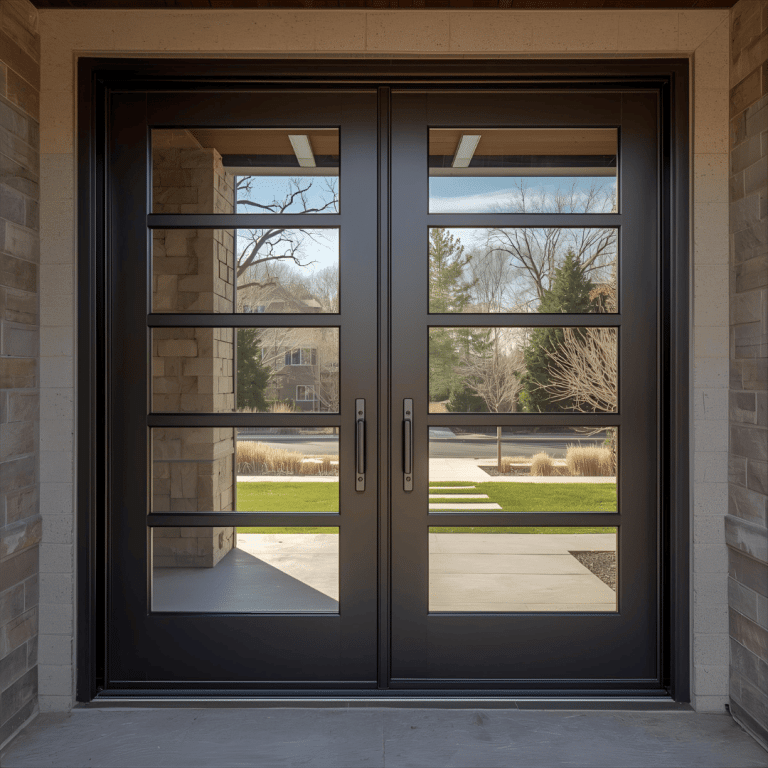


Ultimate Guide to Outside Steel Doors in USA: 2025
Table of Contents
- Introduction: Your Home’s First Line of Defense
- What Are Outside Steel Doors in USA? (Featured Snippet)
- The Unbeatable Advantages of Outside Steel Doors in the USA
- Advantage 1: The Gold Standard in Home Security
- Advantage 2: Built to Withstand the Harshest US Weather
- Advantage 3: A Champion of Energy Efficiency
- Advantage 4: Low Maintenance for a Busy Lifestyle
- Comparing Materials: Why Outside Steel Doors Win
- Table: Outside Door Material Comparison (Steel vs. Wood vs. Fiberglass)
- Decoding the Specs: A Buyer’s Guide to Outside Steel Doors
- Steel Gauge Explained: Why Lower is Stronger
- The Core of the Matter: Insulation Types (Polyurethane vs. Polystyrene)
- Finishes and Weatherproofing: Beyond the Gray Primer
- People Also Ask About Outside Steel Doors
- Matching Your Door to Your US Climate
- For the Cold Northeast & Midwest (Thermal Breaks)
- For the Hot & Humid Southeast (Corrosion & Impact)
- For the Hot & Dry Southwest (UV Resistance)
- Installation: The Most Critical Step for Outside Steel Doors
- Why Professional Installation is Non-Negotiable
- Checklist: Pre-Installation Prep for Your New Door
- Maintenance: Keeping Your Outside Steel Door Perfect
- In-Depth Q&A on Outside Steel Doors in USA
- Conclusion: The Smart, Secure, and Lasting Choice
1. Introduction: Your Home’s First Line of Defense
Your home’s “outside” doors are far more than just a way to get in and out. They are the primary barrier between your family and the outside world, your first line of defense against intruders, and your home’s most important shield against the weather. When it comes to choosing an entryway that excels in all these roles, one material consistently rises to the top for American homeowners: steel. The market for outside steel doors in USA has grown not just because they are strong, but because modern advancements have made them energy-efficient, weather-resistant, and surprisingly stylish.
From my years of experience helping US homeowners secure and beautify their properties, I’ve seen the costly mistakes that come from choosing a door based on looks alone. A flimsy door can mean high energy bills, a constant sense of vulnerability, and a maintenance nightmare. This guide is built to be your definitive resource. We will cut through the marketing fluff to explain what truly matters—from steel gauge and insulation cores to the finishes that will survive a brutal coastal storm or a baking Arizona sun—so you can make an informed, confident investment in your home’s security and value.
2. What Are Outside Steel Doors in USA? (Featured Snippet)
Outside steel doors in USA are residential entry systems made with a durable steel skin over an insulated inner core. They are specifically engineered for exterior use, offering superior security, energy efficiency, and weather resistance compared to other materials, making them a popular choice for American homes.
3. The Unbeatable Advantages of Outside Steel Doors in the USA
When homeowners ask me, “Why steel for my front door?” the answer isn’t a single point, but a powerful combination of factors that are hard to beat.
Advantage 1: The Gold Standard in Home Security
This is the number one reason my clients choose steel. No other residential door material offers the same level of raw, physical strength.
- Forced Entry Resistance: A quality outside steel door, set within a reinforced steel or composite frame, is exceptionally difficult to kick in, pry, or force. The steel skin itself, typically 20-24 gauge, doesn’t crack or split under blunt-force impact the way wood or fiberglass can.
- Reinforced Lock Areas: Manufacturers of quality steel doors add a high-strength lock-block (often wood or composite) inside the door. This means your deadbolt and handle aren’t just screwed into thin foam; they’re anchored into a solid structural component, making the lock itself far more effective.
- Perimeter Security: A steel door and frame system, when professionally installed, creates a rigid perimeter that has no “give.” From my experience, this solid, unyielding feel is a major psychological deterrent to potential intruders, who often move on to find a softer target.
Advantage 2: Built to Withstand the Harshest US Weather
An “outside” door is, by definition, a weather door. It takes the full brunt of whatever nature throws at it, 24/7.
- No Warping or Cracking: This is a critical advantage over wood. Wood doors are notorious for swelling in the humid summers of the Southeast and shrinking and cracking in the dry, cold winters of the Midwest. This warping breaks the door’s weather-seal, leading to drafts and water leaks. Steel is dimensionally stable; it will not bow, warp, or crack, ensuring your seals remain tight year after year.
- Waterproof Skin: Steel does not absorb water. A properly finished steel door will not rot, delaminate, or grow mold, even after a driving rainstorm.
- Impact Resistance: For homeowners in “Tornado Alley” or coastal regions of the USA, a steel door can provide superior protection against flying debris during a severe storm compared to other materials.
Advantage 3: A Champion of Energy Efficiency
It’s a common myth that steel doors are cold. The steel is just a skin; the real performance comes from the high-tech core.
- Insulated Foam Core: Today’s outside steel doors in USA are filled edge-to-edge with an injected, high-density polyurethane or polystyrene foam. This core gives the door an insulation R-value that is often five to six times greater than a solid wood door.
- Lower Utility Bills: This high R-value means the door is an exceptional thermal barrier. In a Minneapolis winter, it keeps your expensive heated air inside. In a Phoenix summer, it blocks the oppressive heat outside. This directly translates to lower energy bills and a more comfortable home.
- ENERGY STAR® Certified: Many modern steel doors are independently tested and certified by the US ENERGY STAR program. This is your third-party assurance that the door meets strict energy performance criteria set by the EPA.
Advantage 4: Low Maintenance for a Busy Lifestyle
If you’re tired of the annual ritual of sanding, scraping, and staining your wood door, steel is a revelation.
- Durable Finishes: Modern steel doors come with a factory-applied primer and often a multi-layer, baked-on paint finish. These finishes are incredibly tough, UV-resistant, and designed to last for a decade or more with just basic cleaning.
- Rust Resistance: This is the most common (and outdated) fear. Today’s outside steel doors in USA are made from hot-dip galvanized (zinc-coated) steel, which chemically inhibits rust. Unless the finish is gouged down to the bare metal and left untreated, rust is simply not an issue.
- Easy to Clean: An occasional wipe-down with mild soap and water is all that is required to keep the door looking new.
4. Comparing Materials: Why Outside Steel Doors Win
While wood has a classic charm and fiberglass is a lightweight contender, steel offers the best balance of performance for an outside door.
Table: Outside Door Material Comparison (Steel vs. Wood vs. Fiberglass)
| Feature | Outside Steel Doors | Wood Doors | Fiberglass Doors |
| Security | Excellent. Highest impact and forced-entry resistance. | Poor to Good. Can be kicked in; splits under force. | Good. Stronger than wood, but can crack under sharp impact. |
| Weather Resistance | Excellent. Does not warp, crack, or rot. | Poor. Warps, swells, rots, and requires constant refinishing. | Excellent. Does not warp, rot, or swell. |
| Durability | Very Good. Extremely strong; can be dented. | Poor. Scratches, dents, and splits easily. | Excellent. Highly resistant to dents, dings, and scratches. |
| Energy Efficiency | Excellent. High R-value foam core is standard. | Poor. Low R-value; poor insulator by itself. | Very Good. Foam core is standard; similar to steel. |
| Maintenance | Low. Requires only cleaning. Dents can be repaired. | Very High. Requires frequent sanding, staining, or painting. | Low. Requires only cleaning. Difficult to repair if cracked. |
| Cost | $ (Affordable) | $$$ (Very Expensive) | $$ (Moderate) |
My Experience: As you can see, steel’s only real “con” is that it can be dented if hit very hard (though this is difficult with 20-22 gauge doors). However, unlike a crack in fiberglass, a dent in a steel door is repairable using the same techniques as auto-body repair. For the price, steel provides a level of security and weather resistance that other materials can’t touch.
5. Decoding the Specs: A Buyer’s Guide to Outside Steel Doors
When you shop, you’ll be hit with a lot of technical terms. Here are the ones that actually matter.
Steel Gauge Explained: Why Lower is Stronger
This is the most important spec for security. In the world of sheet metal, the terminology is counter-intuitive: the lower the gauge number, the thicker and stronger the steel.
- 16-20 Gauge: This is a premium, heavy-duty range. You’ll find this on high-end residential and light commercial doors. The steel is noticeably thicker and far more resistant to dents and forced entry.
- 22-24 Gauge: This is the most common and “standard” range for quality residential outside steel doors in USA. It provides an excellent, secure, and durable skin for most homes.
- 26 Gauge or Higher: This is a very thin, “economy” grade. I would be cautious about using a 26-gauge door for a primary outside entrance, as it will be much more prone to denting and flexing.
The Core of the Matter: Insulation Types (Polyurethane vs. Polystyrene)
The material inside the steel skins dictates your door’s R-value, strength, and sound-dampening qualities.
- Polyurethane (Injected Foam): This is the superior, high-performance option. The foam is injected as a liquid and expands to fill 100% of the door’s internal cavity, bonding chemically to the steel skins. This creates a single, incredibly strong, and rigid unit with the highest possible insulation (R-12 to R-16) and excellent sound-blocking.
- Polystyrene (Rigid Board): This is a solid, rigid foam board (like a high-end cooler) that is cut and placed inside the door. It is a good, cost-effective insulator (R-8 to R-10) but does not offer the same structural rigidity or complete, gap-free insulation as polyurethane. From my experience, the upgrade to polyurethane is almost always worth it for an outside door, especially in extreme US climates.
Finishes and Weatherproofing: Beyond the Gray Primer
- Galvanization: Do not buy an outside steel door that is not galvanized or galvannealed (A60). This zinc coating is what prevents rust.
- Factory Finishes: While you can buy a gray-primed door and paint it yourself, a factory-applied, baked-on paint finish will be far more durable and UV-resistant. This is especially true if you want a dark color, which can cause “heat soak” and damage on lesser-quality doors.
- Weatherstripping: The door itself is only half the system. A quality outside door will come “pre-hung” in a frame with a high-end weatherstripping system (magnetic or compression-fit) and an adjustable threshold. This system is what creates the airtight and watertight seal.
6. People Also Ask About Outside Steel Doors
- Do outside steel doors rust in the USA?Modern, high-quality steel doors do not rust under normal conditions. They are made from galvanized (zinc-coated) steel and protected by durable finishes. Rust would only become an issue if the door was deeply scratched to the bare metal and left unrepaired, especially in a coastal, salt-air environment.
- Are outside steel doors better than fiberglass?It’s a trade-off. Steel is generally stronger, more secure, and less expensive. Fiberglass is more resistant to dents and scratches and can offer a more realistic wood-grain texture. Both are excellent, energy-efficient choices, but for pure security, steel has the edge.
- How much do outside steel doors cost in the US?The cost varies dramatically. A basic, 24-gauge, unpainted steel utility door from a big-box store might start around $250. However, a high-end, 20-gauge, polyurethane-insulated outside entry system with decorative glass, sidelights, and a premium finish can cost $3,000 to $6,000 or more, plus installation.
7. Matching Your Door to Your US Climate
The “best” outside steel doors in USA are not one-size-fits-all. The door that’s perfect for Miami will fail in Minneapolis if not specced correctly.
For the Cold Northeast & Midwest (e.g., Chicago, Boston, Minneapolis)
- Your Enemy: Extreme cold, ice, and drafts.
- Your Must-Haves:
- Polyurethane Core: You need the highest R-value possible.
- Thermal Break: This is non-negotiable. A “thermal break” is a non-conductive material (like vinyl) in the door’s frame and threshold that separates the inside and outside metal. Without it, the bitter cold will travel through the metal frame, causing frost to form on your interior trim.
- High-Performance Weatherstripping: Look for a multi-point sealing system.
For the Hot & Humid Southeast (e.g., Miami, Houston, New Orleans)
- Your Enemy: Humidity, salt air, and hurricanes.
- Your Must-Haves:
- Galvannealed (A60) Steel: This is a superior form of galvanization that is more rust-resistant and holds paint better in humid, salty air.
- Impact-Rating: If you are in a coastal, hurricane-prone area, your local building codes will likely require your outside door to have a specific “impact rating” or “hurricane rating” (like a Miami-Dade certification). This is a critical administrative check.
- Composite Frame: Consider a composite (non-wood) frame, as it is 100% waterproof and will never rot or wick moisture.
For the Hot & Dry Southwest (e.g., Phoenix, Las Vegas)
- Your Enemy: Extreme heat and intense, fading UV sunlight.
- Your Must-Haves:
- UV-Resistant Finish: This is your top priority. A cheap paint finish will fade, chalk, and fail in a matter of years. Look for doors with a high-quality, factory-applied, “Kynar” or “solar-reflective” finish.
- Dark Colors (with caution): Be very wary of painting a steel door a dark color in these climates. The door can get hot enough to boil water, which can damage the core and the finish. If you must have a dark color, ensure it’s a high-end door specifically warranted for it.
8. Installation: The Most Critical Step for Outside Steel Doors
You can buy the best, most expensive outside steel doors in USA, but if they are installed improperly, they will fail. I’ve seen it countless times. A poor installation will lead to drafts, water leaks, a lock that doesn’t engage, and a door that’s hard to open and close.
Why Professional Installation is Non-Negotiable
An outside door is not a simple “slab.” It’s a “pre-hung” system, including the door, frame, and threshold, all engineered to work together. A professional installer’s job is to:
- Remove the Old System: This often involves cutting out the old frame and trim, right down to the “rough opening.”
- Install the New Frame: The new frame must be set perfectly plumb (vertically straight), level (horizontally straight), and square (perfect 90-degree corners). This is the part that takes skill and shims. If the frame is even 1/8th of an inch off, the door will not seal correctly.
- Insulate and Seal: The installer will fill the gap between the new frame and your house’s rough opening with low-expansion foam insulation and then seal the exterior with high-grade, waterproof caulk. This is what creates the airtight and watertight barrier.
Checklist: Pre-Installation Prep for Your New Door
- [ ] Confirm the Order: Before installation day, double-check the order with your supplier. Confirm the door size, style, color, and swing direction (inswing/outswing, left-hand/right-hand) are all correct.
- [ ] Clear the Work Area: The installer will need a large, clear space to work, both inside and outside the entryway. Move all furniture, rugs, and wall hangings away from the door.
- [ ] Protect Your Floors: Lay down drop cloths or cardboard to protect your flooring from tools, dust, and debris.
- [ ] Secure Pets and Children: Installation day can be loud, and there will be an open hole in your house for a short time. Secure pets and small children in a separate, safe room.
- [ ] Discuss the Trim: Talk to your installer before they start. Will they be re-using your old interior trim (casing) or installing new trim? Who is responsible for painting/staining the new trim?
- [ ] Perform a Final Walk-Through: After the installation, operate the door. Open and close it, test the lock, and inspect the seals and caulking. Don’t sign off on the job until you are 100% satisfied.
9. Maintenance: Keeping Your Outside Steel Door Perfect
The beauty of steel is its low-maintenance nature. A full-scale re-sanding and staining like a wood door is never required. For a great guide on this, This Old House has an excellent article on how to clean and maintain an exterior door, which applies perfectly to steel.
A simple annual check-up is all you need:
- Clean: Once or twice a year, wash the door surface with a soft cloth and a simple solution of mild dish soap and water. Rinse it clean. Do not use a pressure washer.
- Inspect: Check the weatherstripping for any cracks or tears and see if it’s still “bouncing back.” These seals are easy and cheap to replace.
- Check the Caulk: Inspect the bead of caulk around the outside of the door frame. If it’s cracking or pulling away, remove the old caulk and apply a new bead of high-quality exterior silicone caulk.
- Touch-Up Scratches: If you get a deep scratch that goes to the bare metal, don’t ignore it. Clean the spot, lightly sand it, and apply a dab of rust-inhibiting primer and matching touch-up paint (available from the manufacturer).
10. In-Depth Q&A on Outside Steel Doors in USA
- Q1: What is the best gauge for a residential outside steel door in the US?For a primary entrance, I strongly recommend a 20- or 22-gauge steel door. This provides a premium level of security and is highly resistant to dents. A 24-gauge door is a solid and common standard, but I would avoid any door with a higher gauge number (like 26) for a security-focused outside door.
- Q2: Can I paint my outside steel door a different color?Absolutely. If the factory finish is in good shape, you just need to prepare it correctly. Clean it thoroughly, lightly scuff-sand the surface to help the new paint adhere, and use a high-quality exterior-grade paint and primer specifically formulated for metal surfaces.
- Q3: Are outside steel doors soundproof?While no door is truly “soundproof,” a polyurethane-insulated steel door is an excellent sound-blocker. The combination of the dense foam core, the two steel skins, and a tight weather-seal system does a fantastic job of muffling exterior noise from traffic, neighbors, and weather.
- Q4: What’s the difference between a “pre-hung” system and a “slab” door?A “slab” is just the door itself. A “pre-hung” system is a complete, ready-to-install unit that includes the door slab, the frame (jambs), the hinges, the threshold, and the weatherstripping. For an outside door, you should always buy a pre-hung system. It is the only way to guarantee a perfect, weather-tight fit.
- Q5: My steel door has a small dent. Is it ruined?Not at all. This is a common misconception. Small-to-medium dents in a steel door can be repaired by a patient DIYer (or a professional) using the exact same materials as auto-body repair: Bondo, glazing putty, sandpaper, and touch-up paint. You cannot do this with a cracked fiberglass door.
11. Conclusion: The Smart, Secure, and Lasting Choice
Choosing an outside steel doors in USA is one of the smartest, highest-ROI (Return on Investment) decisions you can make for your home. You are getting an unparalleled combination of security, all-weather durability, and energy efficiency for a fraction of the cost of a high-end wood door.
By focusing on the critical specifications—a low gauge (20-22) for strength, a polyurethane core for insulation, and a thermally-broken, pre-hung frame for a weather-tight seal—you are investing in a piece of home infrastructure that will perform for decades. This door will protect your family, lower your energy bills, and ask for almost nothing in return.
If you’re ready to upgrade to an entryway that offers true peace of mind, we invite you to explore our collection of high-performance outside steel doors.