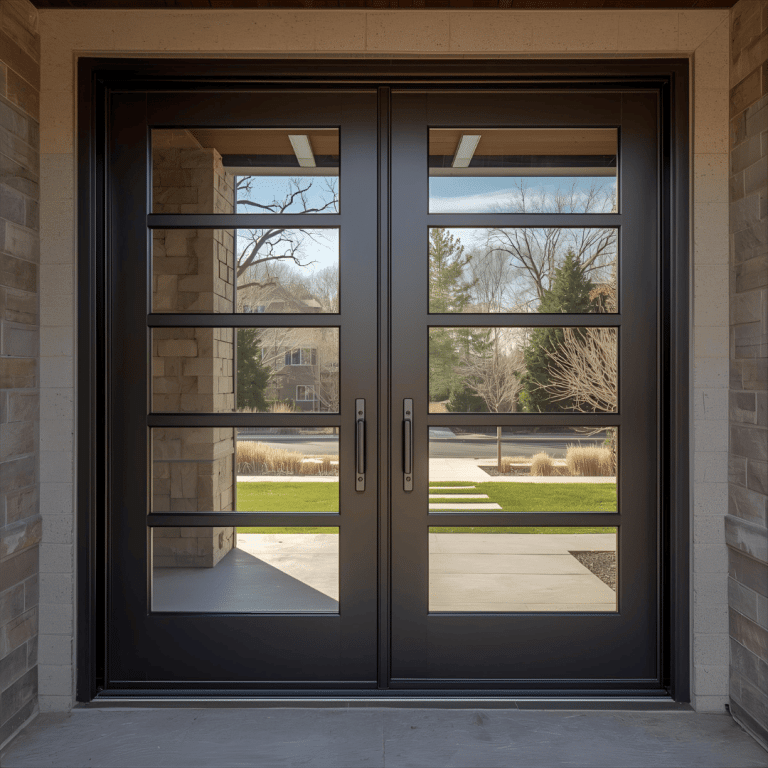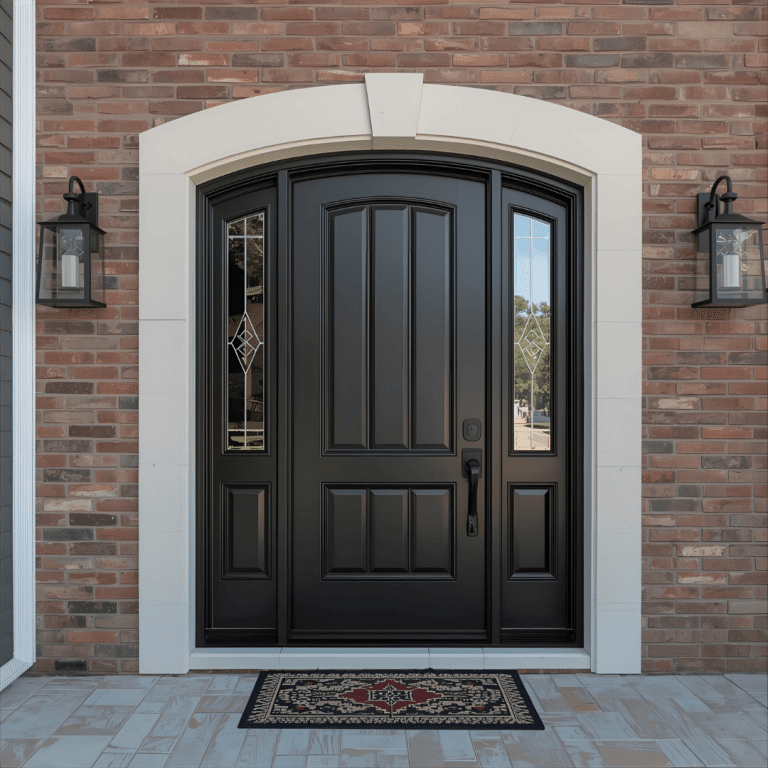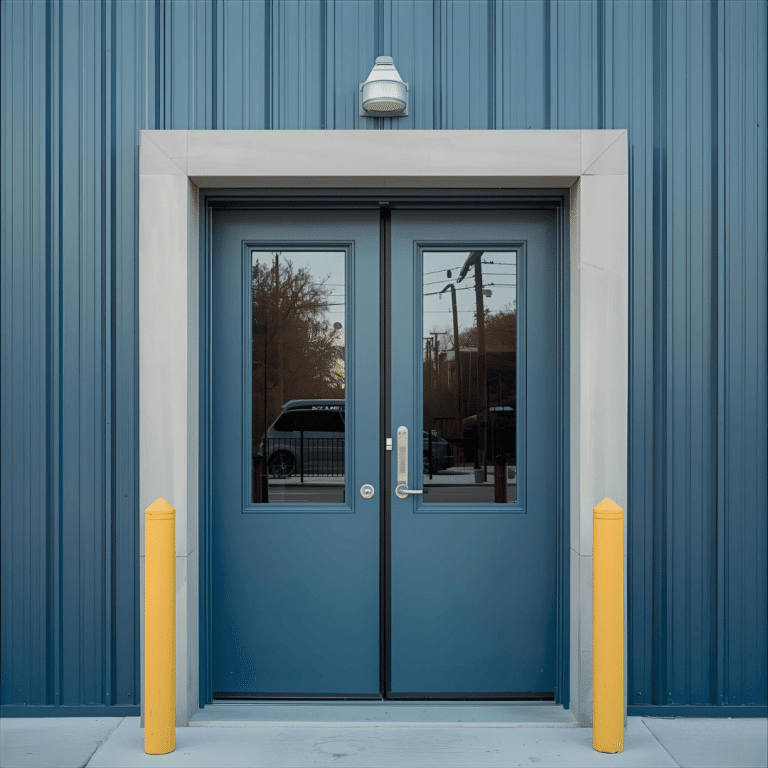


Ultimate Steel Doors for Security in USA: A 2025
Table of Contents
- Introduction: Your Home’s First Line of Defense
- What Are Steel Doors for Security in USA? (Featured Snippet)
- Why Steel is the Ultimate Choice for US Home Security
- Unmatched Forced-Entry Resistance
- Superior Impact & Ballistic Potential
- Fire Resistance: The Overlooked Security Feature
- The Anatomy of a High-Security Steel Door
- Part 1: The Frame – Your Door’s Anchor
- Part 2: The Door Slab – Deconstructing “Steel Doors for Security”
- Part 3: The Hardware – The “Brains” of the System
- Security Door Comparison: Steel vs. Wood vs. Fiberglass
- People Also Ask About Steel Doors for Security
- A Buyer’s Guide: Choosing the Right Security Door for Your US Home
- Residential vs. Commercial-Grade Security
- Key US Certifications (UL, ANSI, SDI)
- Checklist: How to Ensure a Secure Door Installation
- In-Depth Q&A on Steel Doors for Security in USA
- Conclusion: Security is a System, and Steel is its Foundation
1. Introduction: Your Home’s First Line of Defense
In the United States, we invest heavily in protecting our homes—from smart alarm systems and cameras to motion-sensing lights. Yet, the single most critical security component is often the most overlooked: the door. An intruder’s first, and most common, point of attack is the front, back, or garage-entry door. A standard wooden or fiberglass door can be compromised in seconds with a single, well-placed kick. This is why for homeowners who are serious about protecting their families and property, steel doors for security in USA have become the definitive gold standard.
From my experience working with hundreds of US homeowners on their security upgrades, the shift to steel isn’t just a trend; it’s a fundamental move from a “decorative” entryway to a “defensive” one. But not all steel doors are created equal. A thin, unreinforced “steel-skinned” door from a big-box store may offer little more than a false sense of security. A true security door is a complete system—a combination of a thick steel slab, a reinforced core, a heavy-duty frame, and high-security hardware. This guide is designed to cut through the marketing hype and give you the verifiable facts you need to choose a steel door that makes your home a fortress.
2. What Are Steel Doors for Security in USA? (Featured Snippet)
Steel doors for security in USA are residential or commercial entry systems prized for their strength. They feature a thick, heavy-gauge steel skin (typically 16-22 gauge) over a solid or steel-stiffened core, combined with a reinforced frame and high-security hardware to prevent forced entry.
3. Why Steel is the Ultimate Choice for US Home Security
When a homeowner asks me why they should choose steel over a beautiful solid-oak door, my answer is simple: physics. Steel has material properties that wood and fiberglass simply cannot match.
Unmatched Forced-Entry Resistance
The most common form of forced entry in the USA is a “kick-in,” where an intruder uses blunt force to break the door or, more commonly, the wooden frame.
- Steel vs. Wood: A solid wood door, for all its weight, has a grain. When kicked, it splits along this grain.
- Steel vs. Fiberglass: A fiberglass door is essentially a thin skin of plastic resin over foam. It can crack, shatter, and be punctured under impact.
- Steel’s Advantage: A heavy-gauge steel door distributes the force of an impact across its entire surface. It does not split or shatter. When paired with a steel frame, there is no “weak point” to exploit. The door and frame are a single, unified barrier of strength.
Superior Impact & Ballistic Potential
Security goes beyond just break-ins. In many parts of the US, severe weather—from tornadoes in the Midwest to hurricanes on the East Coast—poses a threat. A high-quality steel door is far more resistant to impact from flying debris than other materials. For high-security applications, specialized steel doors for security in USA can even be manufactured with ballistic-resistant cores (rated by UL standards), offering a level of protection that is simply unattainable with other residential materials.
Fire Resistance: The Overlooked Security Feature
A major component of security is life safety. Steel is a non-combustible material. Most exterior steel doors, when part of a complete “assembly” (door, frame, hardware), carry a 20-minute fire rating. This means the door can block the spread of a fire for 20 minutes—critical time for your family to escape. This is a legal requirement in the US for the door between your garage and your home. As the National Fire Protection Association (NFPA) points out, this compartmentalization is a key element of passive fire protection. A wood door, by contrast, is fuel.
4. The Anatomy of a High-Security Steel Door
From my experience, the biggest mistake homeowners make is focusing only on the door slab. A security door is a three-part system: the frame, the slab, and the hardware. If one part fails, the system fails.
Part 1: The Frame – Your Door’s Anchor
You can have a 16-gauge steel door, but if it’s installed in a standard, 3/4-inch pine wood jamb, an intruder won’t attack the door. They will kick the frame, which will splinter and break away, allowing the entire (and still locked) door to swing open.
- Standard Wood Frame (Weak): The thin pine jamb provided in most pre-hung doors is the weakest link. The deadbolt’s “strike plate” is often held by two tiny 3/4-inch screws.
- Reinforced Wood Frame (Good): This is the minimum for security. The flimsy strike plate is replaced with a heavy-duty, four-screw box strike, and the short screws are replaced with 3-inch screws that anchor the strike plate through the pine jamb and into the 2×4 “stud” of the house.
- Steel Frame (Best): This is the ultimate solution. A heavy-gauge (typically 16-gauge) steel frame is anchored directly into the house’s studs. The deadbolt now slots into a solid steel opening. There is nothing to splinter or break. This is the standard for commercial steel doors for security in USA that has been adapted for high-security residential use.
Part 2: The Door Slab – Deconstructing “Steel Doors for Security”
What’s on the inside of the door matters just as much as the steel skin.
- Steel Gauge Explained: This is the #1 specification for security. It refers to the thickness of the steel skin. The terminology is counter-intuitive: the lower the gauge number, the thicker and stronger the steel.
- 24-26 Gauge: A thin, “economy” steel-skinned door. This is prone to denting and offers minimal security benefits over a wood door. Avoid this.
- 20-22 Gauge: A strong, “standard-duty” residential steel door. This is a significant upgrade and a great choice for most US homes.
- 16-18 Gauge: A “heavy-duty” or “commercial-grade” door. This is an extremely thick, heavy, and secure door, highly resistant to impact. This is the top-tier for residential security.
- The Core of the Matter: The core provides insulation, sound-deadening, and rigidity.
- Honeycomb Core: This is a cardboard or paper-based mesh. It’s cheap, light, and offers no security benefits.
- Polystyrene (EPS) Core: A solid, rigid foam board. This is a good standard, offering insulation and some structural rigidity.
- Polyurethane (Injected) Core: This is a superior choice. The foam is injected as a liquid and expands, bonding chemically to the steel skins. This makes the entire door a single, solid, and incredibly rigid panel.
- Steel-Stiffened Core: This is the ultimate security core. Vertical steel ribs (stiffeners) are welded inside the door, and the cavities are then filled with insulation. This creates an internal steel “skeleton” that makes the door exceptionally resistant to being bent, twisted, or punctured.
Part 3: The Hardware – The “Brains” of the System
A $5,000 security door with a $15 lock is a $15 security system.
- Locks: Mortise vs. Cylindrical
- Cylindrical Lock: The standard doorknob or lever, where the lock chassis is installed through a round hole.
- Mortise Lock: A heavy-duty lockset that fits into a large, rectangular pocket (a mortise) cut into the edge of the door. From my experience, mortise locks are far superior for security as they are integrated into the door’s structure and are much stronger.
- Deadbolts: The ANSI Grade SystemThe Builders Hardware Manufacturers Association (BHMA), which is accredited by the American National Standards Institute (ANSI), grades locks based on performance.
- Grade 3: The lowest grade, often found in cheap residential hardware. Avoid for security.
- Grade 2: A solid, “good” residential standard.
- Grade 1: The highest grade, tested for extreme durability and security (e.t., 800,000 cycles, 10 hammer strikes). This is the standard for commercial buildings and the best choice for steel doors for security in USA. Look for a deadbolt with a 1-inch “throw” that is made of hardened steel.
- Hinge SecurityAn intruder who can’t kick in a door may try to attack the hinges.
- Quantity: You need at least three heavy-duty hinges to support the weight of a steel door.
- Pin Security: On an out-swing door, the hinge pins are exposed. An intruder could pop the pins and remove the door. The solution is a non-removable pin (NRP) hinge or security stud hinges, which have a stud that juts into the frame when the door is closed, preventing removal even if the pin is gone.
5. Security Door Comparison: Steel vs. Wood vs. Fiberglass
| Feature | High-Security Steel Door | Solid Wood Door | Standard Fiberglass Door |
| Forced-Entry Resistance | Excellent. (Resists splitting, cracking, and impact) | Poor. (Prone to splitting, cracking, and being kicked in) | Fair. (Can crack or shatter under high impact) |
| Impact Resistance | Excellent. (Distributes force; steel-stiffened option) | Fair. (Can be dented; will split with sharp impact) | Fair. (Resists small dents; can be punctured) |
| Core Options | Excellent. (Polyurethane, Steel-Stiffened) | N/A (Solid or engineered wood core) | Good. (Polyurethane or Polystyrene foam) |
| Frame Security | Excellent. (Steel frame option) | Poor. (Requires heavy reinforcement) | Poor. (Requires heavy reinforcement) |
| Fire Rating | Excellent. (Standard 20-min rating, up to 3 hours) | Poor. (Combustible material; special-order only) | Fair. (Special-order fire-rated models exist) |
| Maintenance | Low. (Durable finish; can be repainted) | Very High. (Requires frequent staining, sealing, or painting) | Low. (Easy to clean; hard to repair if cracked) |
| Typical Cost | $$-$$$ | $$$-$$$$ | $$-$$$ |
6. People Also Ask About Steel Doors for Security
- Are steel doors really more secure than wood?Yes, unequivocally. A heavy-gauge steel door in a steel frame is worlds apart from a wood door in a wood frame. It doesn’t split, warp, or crack, and it provides a much stronger barrier against blunt force.
- Can a security steel door be beautiful?Absolutely. This is a common misconception. Modern steel doors for security in USA are available with high-definition, embossed wood-grain patterns (like oak or mahogany), a vast array of paint colors, and stylish glass inserts (made of tempered or impact-rated glass, of course).
- What is the best gauge steel for a security door?For residential security, I recommend a 20- or 22-gauge steel door. This offers a premium level of security and dent resistance. For high-security needs, or for a commercial-grade feel, 16- or 18-gauge is the top-of-the-line choice.
- How much do steel doors for security in USA cost?The cost varies based on the “system.” A basic steel-skinned door from a home center might be $300. A true high-security system—a 20-gauge, polyurethane-core, pre-hung door with a reinforced frame and Grade 1 hardware—will typically cost between $1,500 and $4,000, plus installation.
7. A Buyer’s Guide: Choosing the Right Security Door for Your US Home
Residential vs. Commercial-Grade Security
You’ll often hear about “commercial-grade” components. For security, this is a good thing.
- Residential (Standard): 24-gauge, wood frame, Grade 3 lock.
- High-Security Residential (What you want): 20/22-gauge, polyurethane core, reinforced wood frame (or steel frame), Grade 1 hardware.
- Commercial-Grade: 16/18-gauge, steel-stiffened, steel frame, Grade 1 mortise lock.
Many US homeowners are now opting for a “light commercial” setup for their homes, which offers an incredible level of security.
Key US Certifications (UL, ANSI, SDI)
Don’t just trust a “security” sticker. Look for these independent, third-party US testing labels.
- UL (Underwriters Laboratories): This is the most important one. Look for a UL label that indicates the door is tested for fire-rating. For security, look for UL 437 (high-security locks) or UL 1034 (burglary-resistant hardware).
- ANSI (American National Standards Institute): As mentioned, this logo on a lock package indicates its Grade (1, 2, or 3). Only buy Grade 1 or 2.
- SDI (Steel Door Institute): This is the US trade association that sets the standards for steel door manufacturing. An SDI-certified door meets strict performance and construction criteria.
8. Checklist: How to Ensure a Secure Door Installation
A high-security door installed incorrectly is not a high-security door. Use this checklist when talking to your installer.
- [ ] Verify Installer: Is the installer licensed, bonded, and insured? Do they have experience with high-security or commercial-grade doors?
- [ ] Check the Frame: Are they using a heavy-duty reinforced wood frame or a steel frame?
- [ ] Check the Anchors: Are they using 3-inch (or longer) screws to anchor the frame and strike plate to the wall studs? This is non-negotiable.
- [ ] Check the Hardware: Is the deadbolt an ANSI Grade 1 or 2 with a 1-inch hardened throw?
- [ ] Check the Hinges: Are there at least three heavy-duty hinges? If it’s an out-swing door, does it have non-removable-pin (NRP) hinges?
- [ ] Test the Installation: After installation, does the door swing smoothly? Does it latch securely without having to pull or push it? Is the weatherstripping creating a tight, 360-degree seal?
9. In-Depth Q&A on Steel Doors for Security in USA
- Q1: What is a “steel-stiffened” core and do I need one?A steel-stiffened core has vertical steel ribs welded inside the door, creating a “skeleton.” It is the most durable, most secure core available, resistant to twisting or puncturing. For most US homes, a polyurethane core is more than sufficient, but if you live in a high-risk area or want “bank-vault” level security, a steel-stiffened door is the top choice.
- Q2: What is a “thermal break” and does it affect security?A thermal break is a non-conductive material (like vinyl) that separates the inside and outside steel skins, usually in the frame. Steel is a conductor, so in cold US climates (like the Northeast or Midwest), this break stops frost from forming on the inside of your door. It does not negatively affect security and is essential for energy efficiency in cold climates.
- Q3: Will a steel security door rust?This is an outdated concern. Modern steel doors for security in USA are made from hot-dip galvanized (zinc-coated) steel and are treated with a multi-layer, baked-on primer and paint finish. They will not rust unless the finish is deeply gouged to the bare metal and left unrepaired in the elements.
- Q4: What is a multi-point locking system for a steel door?A multi-point lock is a premium security feature. When you turn the key, it engages not just one deadbolt, but three or more separate bolts that lock into the frame at the top, middle, and bottom. This makes it almost impossible to pry the door open, as it’s anchored at multiple points.
- Q5: Can I add security features to my existing steel door?Yes. If you have a decent steel door but a weak frame or hardware, you can make significant upgrades. You can add a heavy-duty box strike with 3-inch screws, upgrade your deadbolt to an ANSI Grade 1 model, and add a door reinforcement wrap around the lock area. These are all high-ROI, cost-effective security improvements.
10. Conclusion: Security is a System, and Steel is its Foundation
A secure home is not an accident. It is a result of deliberate choices. While alarms and cameras are excellent deterrents, your first and most important investment should be in “hardening the target.” This starts at your entryway.
Choosing one of the high-quality steel doors for security in USA means you are not buying a simple door; you are investing in a complete security system. By ensuring you have a heavy-gauge steel slab, a solid and rigid core, a heavy-duty frame anchored to your home’s structure, and ANSI Grade 1 hardware, you are creating a barrier that will frustrate, deter, and ultimately defeat a potential intruder.
If you’re ready to make the definitive upgrade to your home’s security, we invite you to explore our collection of premium security steel doors.